
Valoriise®: Reimagining the Wastewater Treatment Plant of Tomorrow
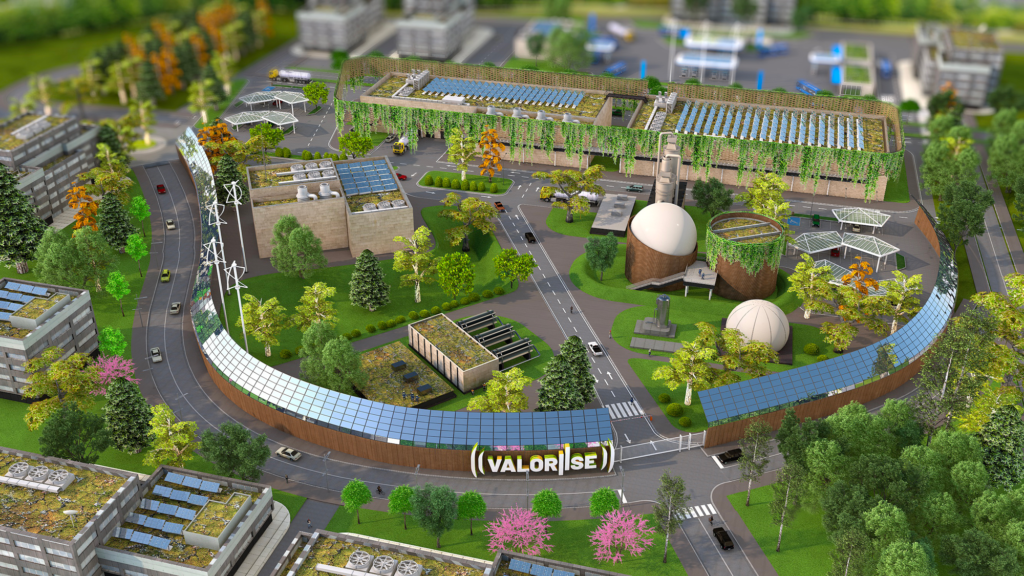
In response to the challenges of decarbonization, energy transition, resource preservation, and the strengthened regulatory framework introduced by UWWTD 2.0, Stereau has developed Valoriise®, a new-generation wastewater treatment plant concept. Its name, an anagram of Lavoisier, embodies its core philosophy: “Nothing is lost, everything is transformed.”
Today, wastewater treatment plants consume significant amounts of energy to remove the carbon, nitrogen, and phosphorus present in wastewater. Valoriise aims to reverse this approach: instead of simply removing these elements, the project seeks to capture, transform, and recover them as valuable resources.
Three Pillars for Reimagining the Wastewater Treatment Plant
Valoriise® is built around three complementary principles that redefine material and energy flows across the entire wastewater treatment plant.
- Maximize Carbon Capture
- Recovering Nitrogen and Phosphorus
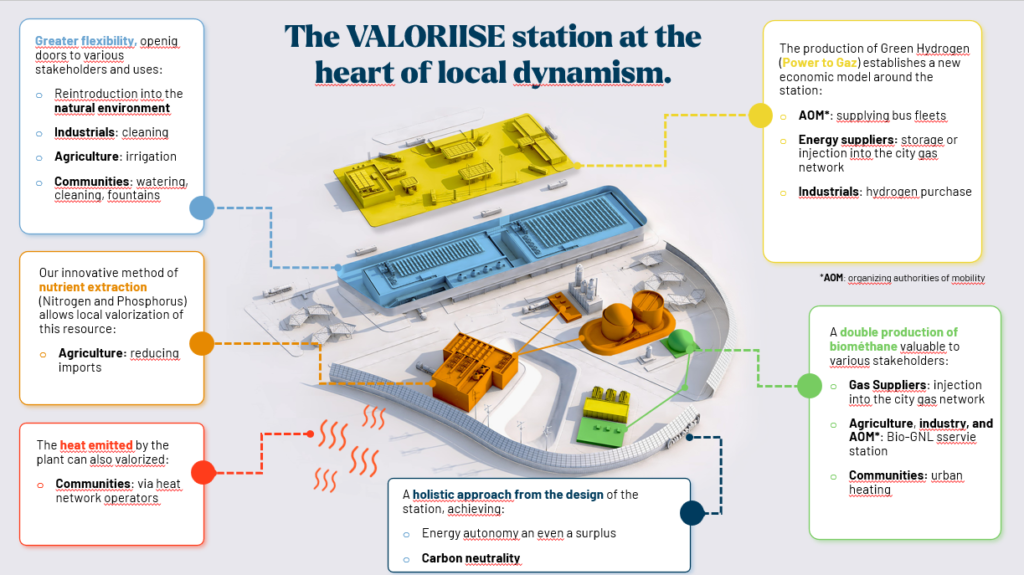
- Maximizing Renewable Gas Production Through Biological Methanation
From Wastewater Treatment Plant to Resource Recovery Hub
Beyond its primary role of treating wastewater and protecting natural environments, a wastewater treatment plant can become a true local resource recovery hub. Depending on local needs and site-specific conditions, it can help produce and recover reclaimed water, biomethane, heat, electricity, and nutrients. Biological methanation also creates a link between water infrastructure and energy systems: renewable electricity can be converted into renewable gas through hydrogen production, providing an energy carrier that is easier to store and valorize.
An Approach Developed and Tested at Demonstration Scale
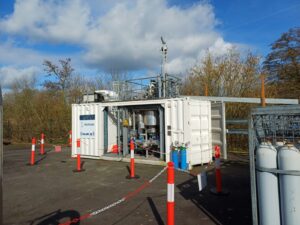
Valoriise® builds on several ongoing R&D programs and demonstration projects that validate the different technological building blocks: carbon capture and sludge management in Saumur, a biological methanation pilot with Enosis in Liffré, research conducted with INRAE on the La Feyssine platform in Lyon, and trials focused on nitrogen and phosphorus recovery in the Netherlands. These pilot projects are gradually enabling the transition from technology validation to their integration within a comprehensive wastewater treatment plant architecture.
Preparing Wastewater Treatment for Tomorrow
With the Urban Wastewater Treatment Directive (UWWTD) currently being transposed across EU Member States, the strengthening of decarbonization targets, rising energy costs, and the need to better preserve natural resources, local authorities must now rethink their wastewater management models.
With Valoriise®, Stereau proposes a new approach: to turn the wastewater treatment plant from a facility dedicated solely to treatment into a key player in the circular economy and the energy transition of local communities. Treating water remains its primary mission. Valoriise also gives it the ability to preserve, produce, and recover the valuable resources it contains.